ADHD routine disruption often shows up right after things start going well. You finally get into an ADHD routine and for once, it’s actually working. Then something comes up. A plan. A day that doesn’t follow the script. You say yes — or it just happens. And suddenly the routine is GONE. Not slowly. Just… gone. One break and it feels like it’s over. Because you know how hard restarting can be, you become more cautious. You stop making plans. You avoid anything that might throw things off. Now the idea of starting fresh feels heavier than the routine ever did.
ADHD routines and emotional regulation are closely connected, which is why this moment hits harder than it sounds if you have ADHD or AuDHD. Routines aren’t just about productivity. They help you feel regulated and less overwhelmed. So when one small break happens, your brain jumps straight to all-or-nothing thinking “I’ve already messed it up. I’ll just restart properly later”
This article is about what happens after that moment. It explains why routines fall apart more easily for neurodivergent brains, why “starting fresh” often makes things worse, and how coming back gently leads to routines that actually last.
30 day money back guarantee
No Credit Card Required Upfront
How ADHD Routine Disruption ACTUALLY Shows Up
When routines break, the signs aren’t always obvious. It doesn’t feel dramatic but shows up in small, frustrating moments that you keep brushing off.
- You wake up already feeling behind, so you decide to “start properly tomorrow.”
- You open your planner, scroll for a second, then close it because it feels like too much.
- You do one small task just to feel productive and like you’ve ‘done something’, then avoid everything else.
- You wait to feel motivated before starting but that feeling never arrives.
- You keep telling yourself you care about your goals and that they’re important, even though you’re not completing them
- You want to get back on track, but you can’t figure out where to begin.
These aren’t signs of laziness or lack of discipline. They’re signs your routine lost its entry point and needs a way back in.

Why “Starting Fresh” Usually Makes Things Harder
After a routine breaks, most people don’t ease back in. They try to restart everything at once.
a) It Breaks the Cues Habits Rely On
They return to the original routine with the same expectations, the same structure, and the same pressure to “do it properly.” But research shows that habits are highly dependent on context. They rely on stable cues like time, location, and sequence to trigger behaviour automatically. When those cues are disrupted, the habit no longer runs on autopilot (Wood, 2024). Trying to restart the entire routine at full strength increases cognitive effort and self-control demands, which makes collapse more likely.
b) It Places Too Much Weight on Motivation
Others wait for the “right moment” to start again, when motivation feels higher or life feels calmer. However, research consistently shows that motivation is an unreliable starting point. Action tends to come before motivation, not after it. Waiting to feel ready often keeps people stuck instead of helping them move forward (Ceceli et al., 2019).
c) It Removes a Clear Starting Point
This is even harder with ADHD. Inattention is strongly linked to procrastination, especially when a task has no clear starting point (Niermann & Scheres, 2014). When a routine is already broken, restarting it requires focused initiation without the support of habit or structure. So the brain delays. Not because the goal doesn’t matter, but because getting started feels cognitively heavy. In this context, “waiting until you feel ready” isn’t a strategy but it’s a trap that quietly extends the break.
d) It Makes Transitions Feel Heavier
Some people avoid the routine altogether as returning to it feels awkward and emotionally heavy. Adults with ADHD often describe everyday difficulties with organising, planning, remembering tasks, and task initiation (Grinblat & Rosenblum, 2025). This is because these skills are affected by their neurodivergence, making transitions hard to manage.
e) It Removes the Support That Holds Routines Together
This aligns with research on self-care strategies in ADHD. Adults with ADHD often rely on external aids, self-created systems, and personal routines to manage daily life. When a routine breaks and those supports aren’t there, restarting becomes harder. Not just practically, but emotionally because the tools that help keep things going are missing or harder to access (Becker et al., 2023).
ADHD Routines and Emotional Regulation: Re-Entering Without Starting Fresh
You don’t need to restart the whole routine to get back in. You need an entry point, also known as a clear, low-effort way to begin. Different entry points work for different brains and different days. Pick one that is the most suited to you.
Physical Entry Points
Physical entry points work because they remove the need to decide what to do first. Research shows that ADHD is linked to difficulties with task initiation and behavioural regulation, which makes it harder to move from intention to action without a clear trigger (Rabin et al., 2011).
A physical entry point is a small, visible action that tells your brain, this is where I start. For example, opening the routine app, putting your laptop on the desk, or sitting in the same chair you usually work from. You’re not committing to the whole routine, just to that first physical step.
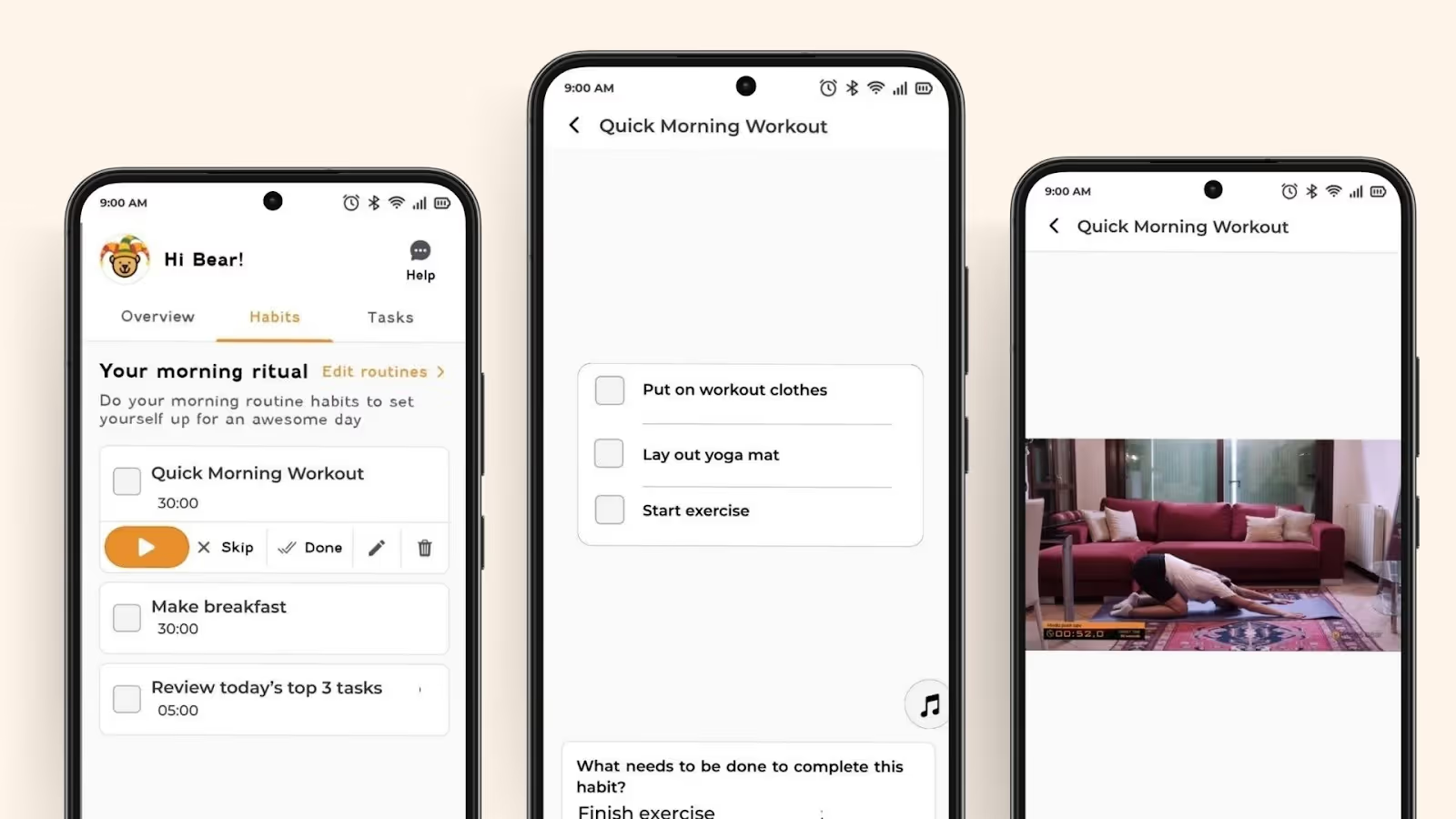
Once the body moves, the brain often follows. That single action helps shift you into motion without needing motivation or mental energy to decide what comes next.
Time-based Entry Points
Time-based entry points work best when they’re tied to one specific moment, not an entire schedule. Research shows that people with ADHD often have difficulties with time perception and temporal organisation, which makes broad plans like “every morning” or “later today” harder to follow through on (Toplak et al., 2006).
A time-based entry point gives your brain a clear starting signal. For example: “after I make my coffee,” “when my first alarm goes off,” or “as soon as I sit down at my desk.” You’re not planning the whole routine, just choosing the moment it begins.
That single anchor reduces uncertainty. Instead of deciding when to start all over again, the time cue does the work for you. Starting becomes more predictable, and therefore easier.
Environmental Entry Points
Environmental entry points work because your surroundings do some of the thinking for you. Research on habit disruption shows that when routines are tied to stable cues, behaviour becomes more automatic and easier to restart (Ceceli et al., 2019).
For people with ADHD, a familiar setup can lower the mental effort needed to begin. Sitting in the same chair, using the same desk, or opening the same workspace signals to your brain, this is what we do here. You don’t have to remember the routine or plan the steps — the environment already points you in the right direction.
External Entry Points: Put the Routine Outside Your Brain
For many ADHD and AuDHD brains, restarting a routine fails because too much of it lives in your head. You have to remember what to do, decide where to start, and keep track of the steps. This can feel even more difficult when you are already feeling behind.
Research shows that effective ADHD interventions don’t rely on motivation. They rely on external structure. Cognitive Behavioural Therapy for adult ADHD uses tools like written plans, schedules, and step-by-step breakdowns to reduce the mental effort of getting started. In controlled trials, these approaches significantly improved ADHD symptoms compared to control conditions (Safren et al., 2010).
Meta-cognitive therapy (MCT) for adult ADHD addresses a related but slightly different problem. Rather than focusing on the content of thoughts, MCT focuses on how people relate to their thoughts. It trains individuals to step back from distracting, anxious, or unhelpful mental loops and to use practical organisational strategies that support planning, time management, and self-regulation (Solanto et al., 2010). This makes task initiation easier, particularly after routines have been disrupted.
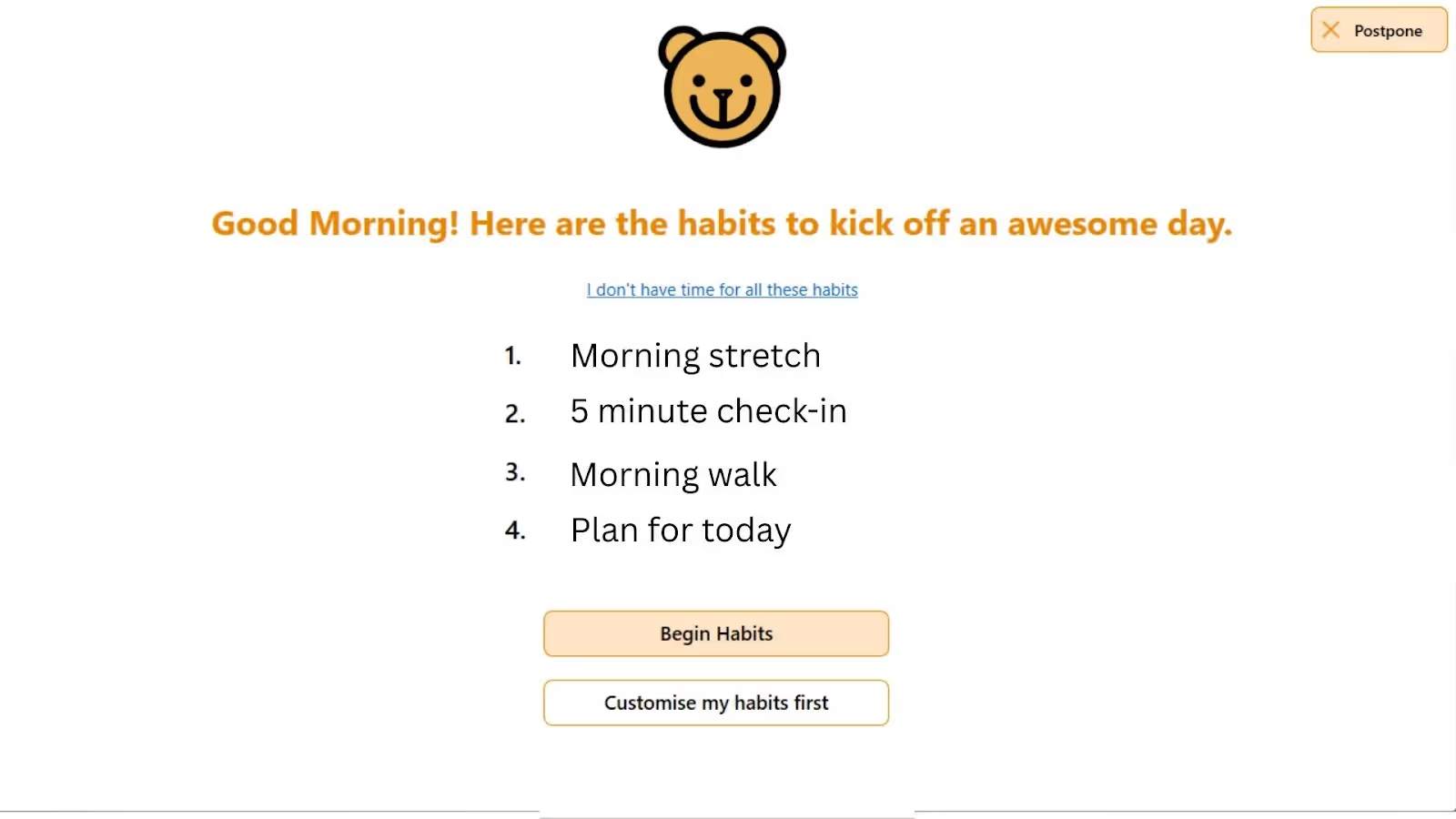
Together, these approaches highlight an important point: when a routine breaks, telling yourself to “restart” is too vague. There is no clear mental handle for where to begin. External entry points solve this by providing a concrete first step. Not the entire routine. Just the starting point.
This is where tools that hold the routine for you can help. For example, Focus Bear’s routine builder and gentle prompts are designed to externalise routines — breaking them into visible, guided steps so you’re not relying on memory or motivation to start.
FAQs about ADHD Routine Disruption
1. When should you start fresh with ADHD routines?
You’re generally better off without a full reset, unless the routine genuinely no longer fits your life context. For example, a significant change in work or study hours, a long-term shift in sleep schedule, moving homes or taking on new responsibilities and roles.
Research shows habits depend on stable context and cues. When those change completely, rebuilding makes sense. Otherwise, frequent resets can make routines less stable over time (Gardner et al., 2012).
If you want to explore why “falling off” routines doesn’t mean failure and why returning softly often works better than starting from scratch, read our guide on why falling off ADHD routines doesn’t mean you failed.
2. Does medication fix ADHD routine disruption?
No. Medication can reduce core ADHD symptoms like inattention and impulsivity, which may make it easier to re-enter a routine, especially when paired with clear entry points or external systems. But medication alone doesn’t rebuild routines. It works best alongside structures that reduce cognitive load, not instead of them.
If you’re considering medication, it's important to speak to a healthcare professional and use trusted medical guidance. The NHS provides a clear overview of ADHD medication, how it works, and when it’s recommended.
If you’re interested in how medication interacts with routines and day-to-day functioning over time, you can read more about how ADHD medication affects daily routines and long-term consistency.
ADHD Routine Disruption: Re-Entering, Not Resetting
Most ADHD routine disruption doesn’t mean your routine failed, it just means it lost its entry point. Because ADHD routines are closely tied to emotional regulation, breaking them can feel heavier than starting them ever did.
In everyday disruptions, resetting usually adds pressure and makes re-entry harder. A full reset only makes sense when your life context has genuinely changed with new schedules, roles, or environments. Otherwise, returning through small, supported entry points is often what helps routines last.
Hi I'm Jeremy, and I understand the challenges of living with ASD and ADHD.