Our phones have become indispensable companions in daily life. For many people, especially those dealing with ADHD and social media distraction, the first thing we do after turning off the morning alarm is reach for the screen.
We check the news while eating breakfast, listen to music or podcasts during the commute, and glance at notifications between tasks. Social media, messages, and short videos fill the small gaps in our day so quickly that we often don’t notice how automatic the habit has become.
The convenience is real. But so is the cognitive cost. Constant streams of new information compete for your attention, making it harder to stay focused on what you actually meant to do.
You might recognize moments like these:
- Waking up in a good mood, then feeling unsettled after reading the news
- Planning your day carefully, then getting pulled into messages
- Sitting down to work, then drifting into short-form videos
- Opening a tutorial to learn something useful, then clicking into unrelated content
These small attention shifts add up. Over time, many people find themselves reacting to the digital world more than directing their own focus.
In this article, we’ll look at why social media is so hard to resist with ADHD, who is most vulnerable, and practical ways to protect your focus without stepping away from the digital world entirely.
30 day money back guarantee
No Credit Card Required Upfront
How Social Media Trains Your Brain to Stay Distracted
Social media and digital platforms are not passive tools. They are intentionally designed to capture and hold attention. For people dealing with ADHD and social media distraction, this environment can be especially challenging.
Recent research exploring the comorbidity between ADHD and internet addiction has revealed a concerning trend: the very features that make digital platforms so engaging—short bursts of stimulation, unpredictable rewards, and endless novelty—mirror the needs of the ADHD brain, which craves high stimulation and struggles with self-regulation (Gazzillo & Sesso, 2024).
ADHD is commonly associated with differences in:
- Self-awareness – difficulties in monitoring one’s internal state or realizing when attention has drifted.
- Self-monitoring – challenges in adjusting behavior to stay on task or maintain focus.
This is linked to frontal lobe dysfunction, a region responsible for impulse control, emotional regulation, and time management. As a result, individuals with ADHD are especially vulnerable to the dopamine loops of likes, comments, autoplay videos, and infinite scroll (Asaoka & Noro, 2020).
But this vulnerability doesn’t just belong to the clinically diagnosed. In an age of constant digital stimulation, even people without ADHD traits can begin to experience similar patterns of attention fragmentation and emotional dysregulation.
In fact, longitudinal studies suggest that ADHD traits may predict the development of internet addiction, particularly when people turn to the online world as a form of self-soothing or escapism (Zhou et al., 2020). What may begin as a coping mechanism can evolve into a compulsive behavior, where individuals lose track of time, seek stronger stimulation, and struggle to disengage.
Over time, digital platforms do more than respond to user preferences. They can reinforce and strengthen attention patterns, especially when those patterns are already sensitive to distraction.
Why Some People Are More Vulnerable Than Others
Not everyone responds to content the same way. While some scroll casually, others—particularly teens, students, and those with ADHD tendencies—find it harder to stop.
Short video platforms like TikTok is designed around high-speed, low-effort consumption: short clips, fast edits, catchy music, and bright visuals. This “fast-food media” encourages shallow engagement and trains the brain to crave novelty and constant stimulation, making it harder to focus on anything requiring sustained attention.
Researchers have proposed four major theories to explain how this content structure affects attention (Zhu et al., 2024):
- Excitement Hypothesis: Fast-paced media raises our baseline for stimulation, making ordinary tasks like reading or studying feel underwhelming.
- Displacement Hypothesis:Time spent on short-form content can reduce time available for deeper cognitive activities such as reading, reflection, or extended learning.
- Scan-and-Shift Hypothesis: Frequent exposure to rapid cuts and scene changes teaches a browsing-style attention pattern, reducing mental endurance.
- Fast-Paced Arousal Habituation Hypothesis:Constant sensory stimulation raises the brain’s arousal threshold, decreasing tolerance for slower, more effortful tasks.
In academic settings, especially among students, this manifests as information overload:
- Constant content updates make it difficult to focus on one task for long.
- Students struggle to process information deeply, often skimming instead of engaging.
- Attention becomes fragmented, and cognitive fatigue builds up quickly.
Over time, heavy reliance on fast-paced digital content may also affect offline habits. When more time is spent scrolling than interacting face-to-face, some individuals experience reduced in-person engagement and increased feelings of disconnection.
People with existing attention challenges, such as ADHD, are the most vulnerable. Studies show that adolescents with higher ADHD symptoms are significantly more likely to develop problematic short-video habits within months. The rapid-reward environment acts like a magnet for brains already wired to seek stimulation and avoid effortful tasks.
While anyone can be distracted by digital media, those with weaker self-regulation systems, whether due to age, neurological differences, or high digital exposure, face a higher risk of losing intentional control over their time and attention.
5 Simple Ways to Break Free from the Scroll Trap
Regaining control over your attention does not require quitting social media entirely. For most people, especially those managing ADHD and social media distraction, the goal is to build systems that make focused behavior easier and mindless scrolling less automatic.
Small environmental changes often work better than relying on willpower alone. Here are five practical ways to reduce digital distraction and protect your focus.
1. Use Time Blocking With Intentional Breaks
Unstructured time makes it much easier to drift into social media without noticing. Creating clear focus windows followed by planned breaks helps your brain know when to engage and when to rest.
You might try:
- 25 to 50 minute focus sessions
- short, scheduled breaks
- a defined start and stop time for deep work
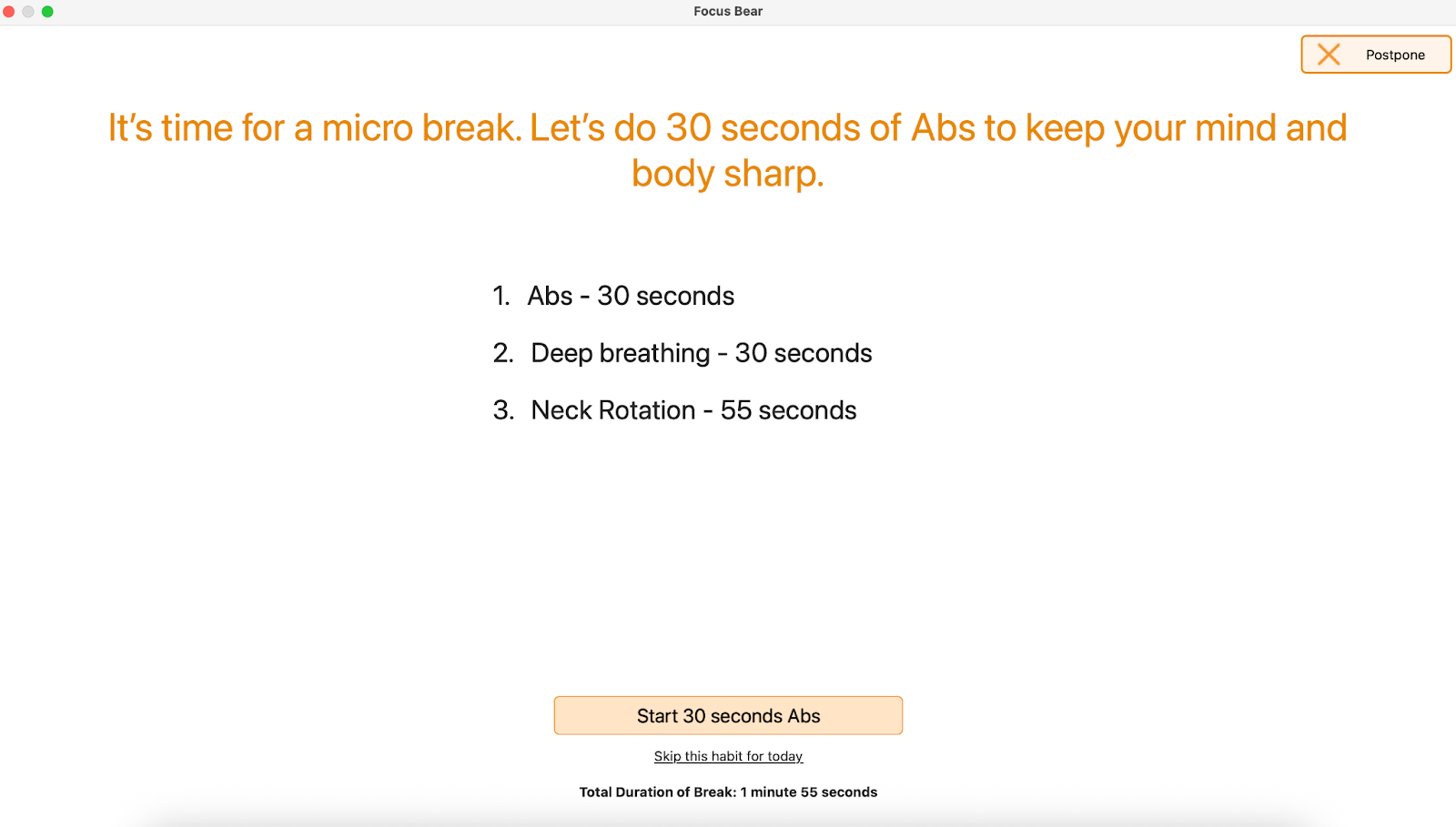
Tools that automate focus sessions, such as Focus Bear, can help by blocking distracting apps during your chosen work periods so you do not have to rely entirely on self-control.
2. Reduce Instant Gratification Triggers
Many distraction loops begin with small cues like notifications, badges, or autoplay content. Reducing these triggers lowers the number of times your attention gets pulled away.
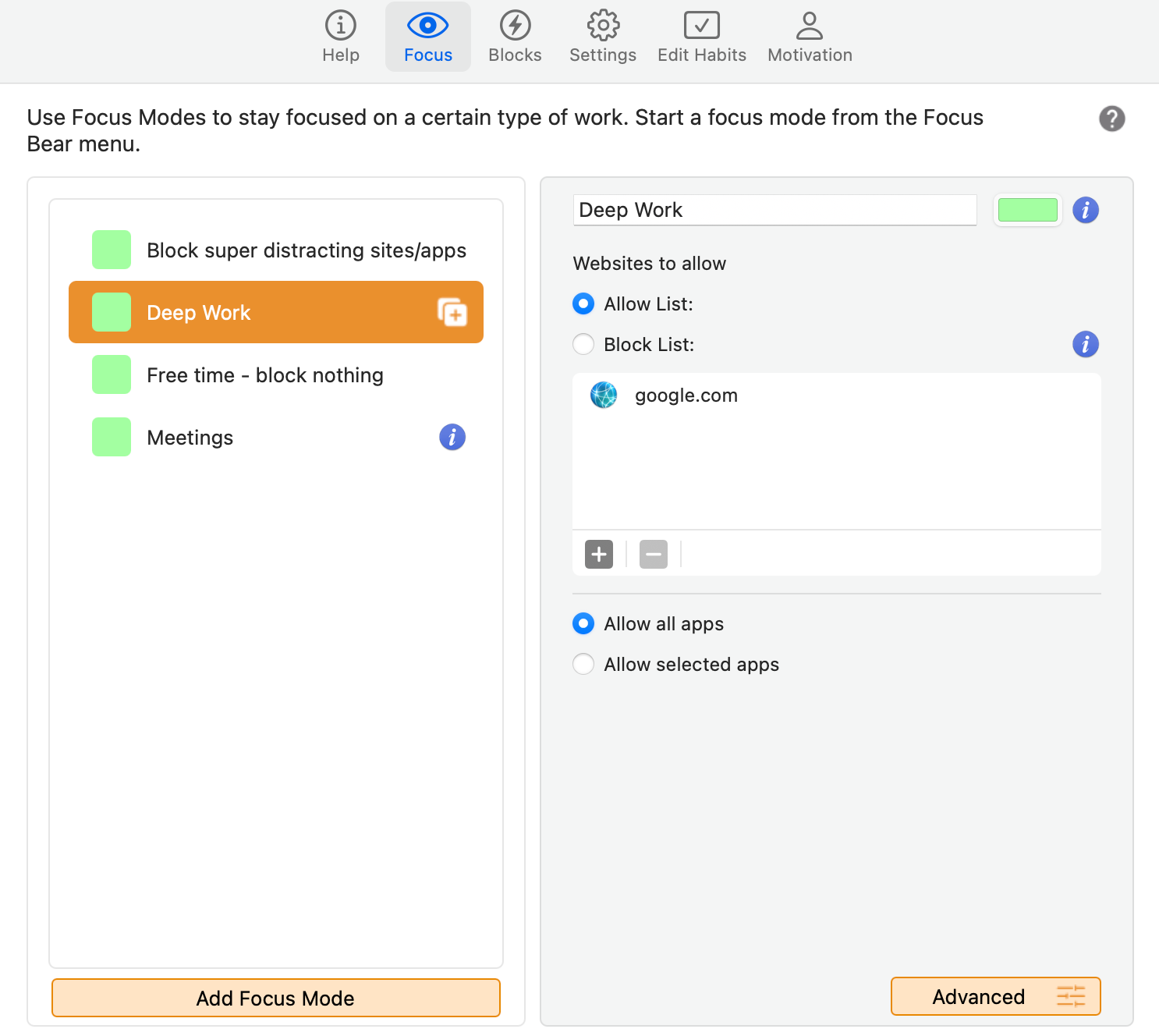
Helpful adjustments include:
- turning off non-essential notifications
- removing social media from your home screen
- disabling autoplay where possible
- using app or website blockers during work hours
The goal is not perfection but fewer automatic interruptions throughout the day.
3. Schedule Social Media on Purpose
Scrolling becomes harder to control when access is unlimited and unstructured. Setting specific windows for social media use helps retrain your brain to expect delayed gratification.
For example:
- check social media after lunch
- allow a short evening scroll window
- avoid opening apps during focus blocks
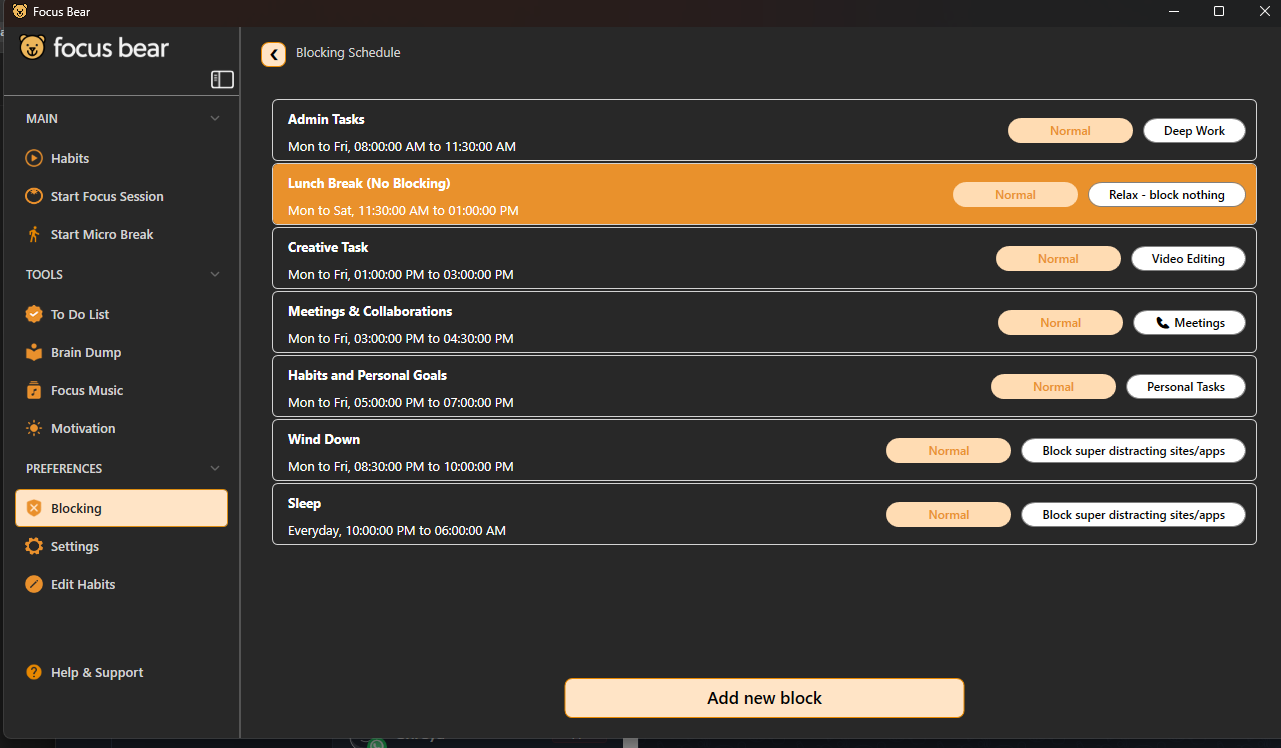
Some people use scheduling or blocking tools to enforce these boundaries across devices, which can be especially helpful for ADHD brains that struggle with impulse control.
4. Track Your Attention Patterns
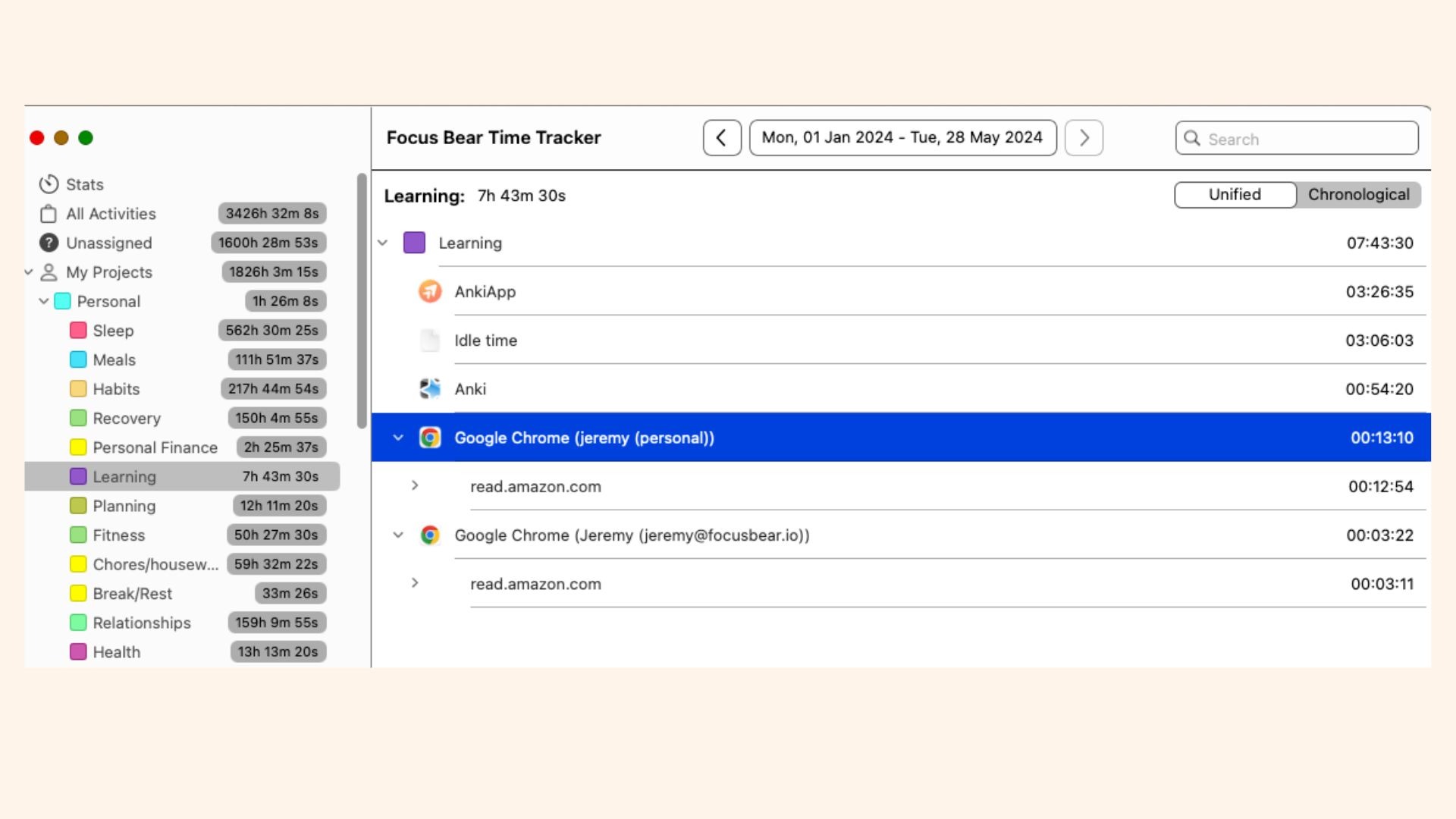
Many people underestimate how often they switch tasks or check their phones. Tracking your screen time for even a few days can reveal patterns that are otherwise easy to miss.
Look for:
- when you are most likely to scroll
- which apps consume the most time
- how focus changes across the day
Focus Bear and similar tools can provide automatic usage insights, but even simple manual tracking can increase awareness and support behavior change.
5. Start Your Day Before the Algorithm Does
The first 30 to 60 minutes after waking often set the tone for your attention throughout the day. Reaching for social media immediately can put your brain into reactive mode before you have chosen your priorities.

Instead, consider starting with:
- light movement or stretching
- a short planning check-in
- hydration and basic morning care
- a few minutes of quiet before opening apps
Some people find it helpful to use guided morning routines or app blockers during this window so their day begins more intentionally.
A gentle note
If you often feel scattered, pulled off track, or mentally overloaded, you are not alone. Modern platforms are highly effective at capturing attention, and ADHD brains can feel this pull even more strongly.
Tools like Focus Bear are not a complete solution on their own, but they can provide helpful external structure if you benefit from guided routines and automatic distraction blocking. The most important step is starting with small, repeatable changes that make focus easier to maintain over time.
Hi I'm Jeremy, and I understand the challenges of living with ASD and ADHD.